X
In fifth grade, the teacher sent us home with a permission slip for Sex Ed. My parents made a scene and marked an emphatic X next to “no." They would have said no to D.A.R.E. (Drug Abuse Resistance Education) too if given the choice, all on the premise that if kids learned these things existed, they would be more likely to do them.
On the first day of ninth grade, my mother took public transit with me from our home in Queens to Stuyvesant High School in downtown Manhattan. The M was the closer subway line, but it was out of service due to construction, so we took the bus to the L to the A/C/E.
My mother counseled me to leave home with a buffer so I'd never be late to school. She expected me home punctually, too. "Never get off at any stop other than Fourteenth Street," she said, "and do not miss your stop on the way home." I imagined a wasteland between Myrtle-Wyckoff and Fourteenth. I had a quarter for the pay phone, just in case something happened.
Also on the first day of ninth grade: the social studies teacher assigned seats in alphabetical order, which put me next to a boy named Ilya.
Later that fall, the M train resumed serviced and I started taking it instead of the L.
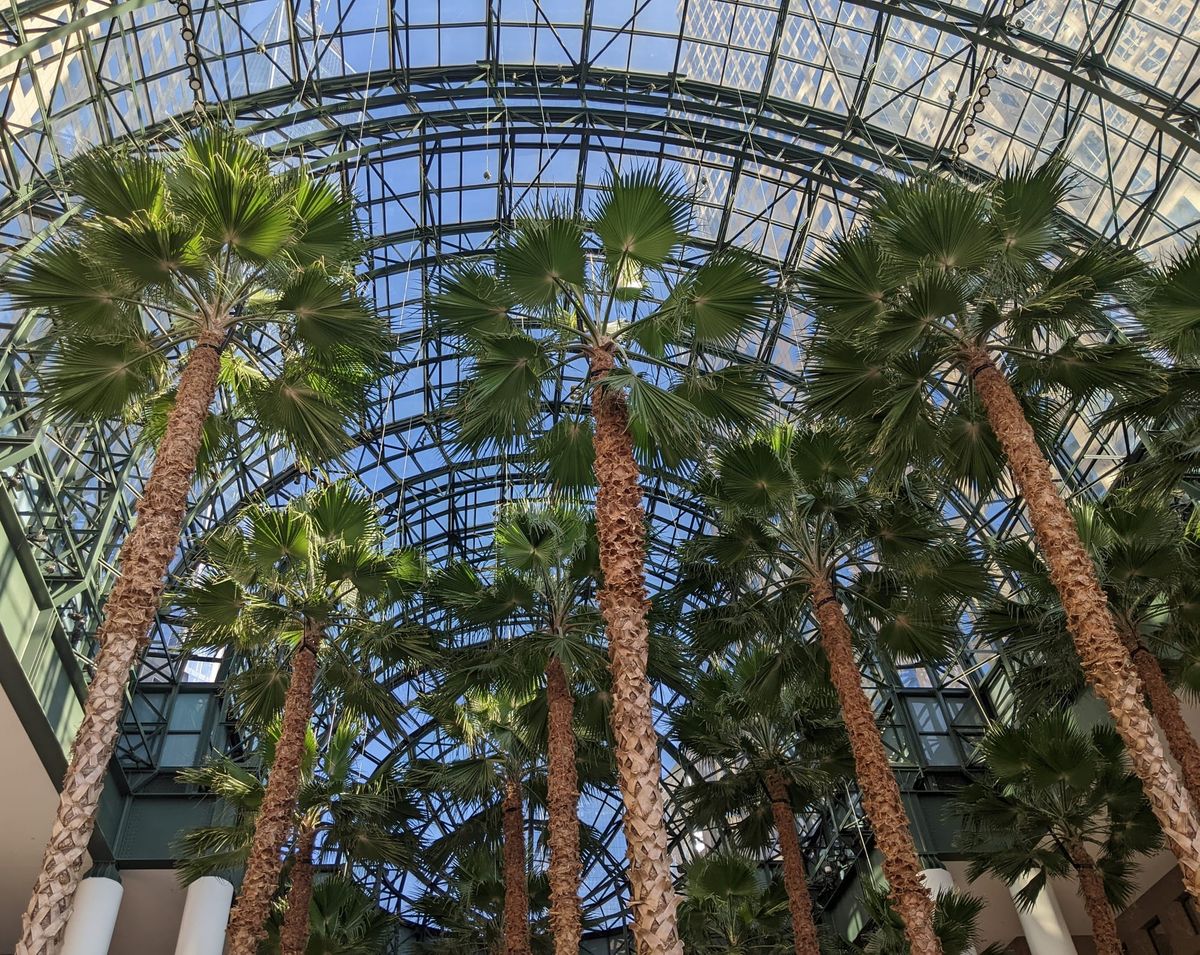
I didn't tell my mother this way was faster. The extra time was mine. Mornings, I hung out by my locker, or in the school library, and afternoons, I would frequent Battery Park, a park they said was built on landfill, and the Winter Garden at the foot of the World Trade Center a few blocks south of school, with Ilya, the boy I liked, who liked me back. We passed by Godiva again and again, plucking chocolate covered strawberries from the trays of samples. In the Store of Knowledge he touched everything, and I fretted that our backpacks would knock over some pricey object.
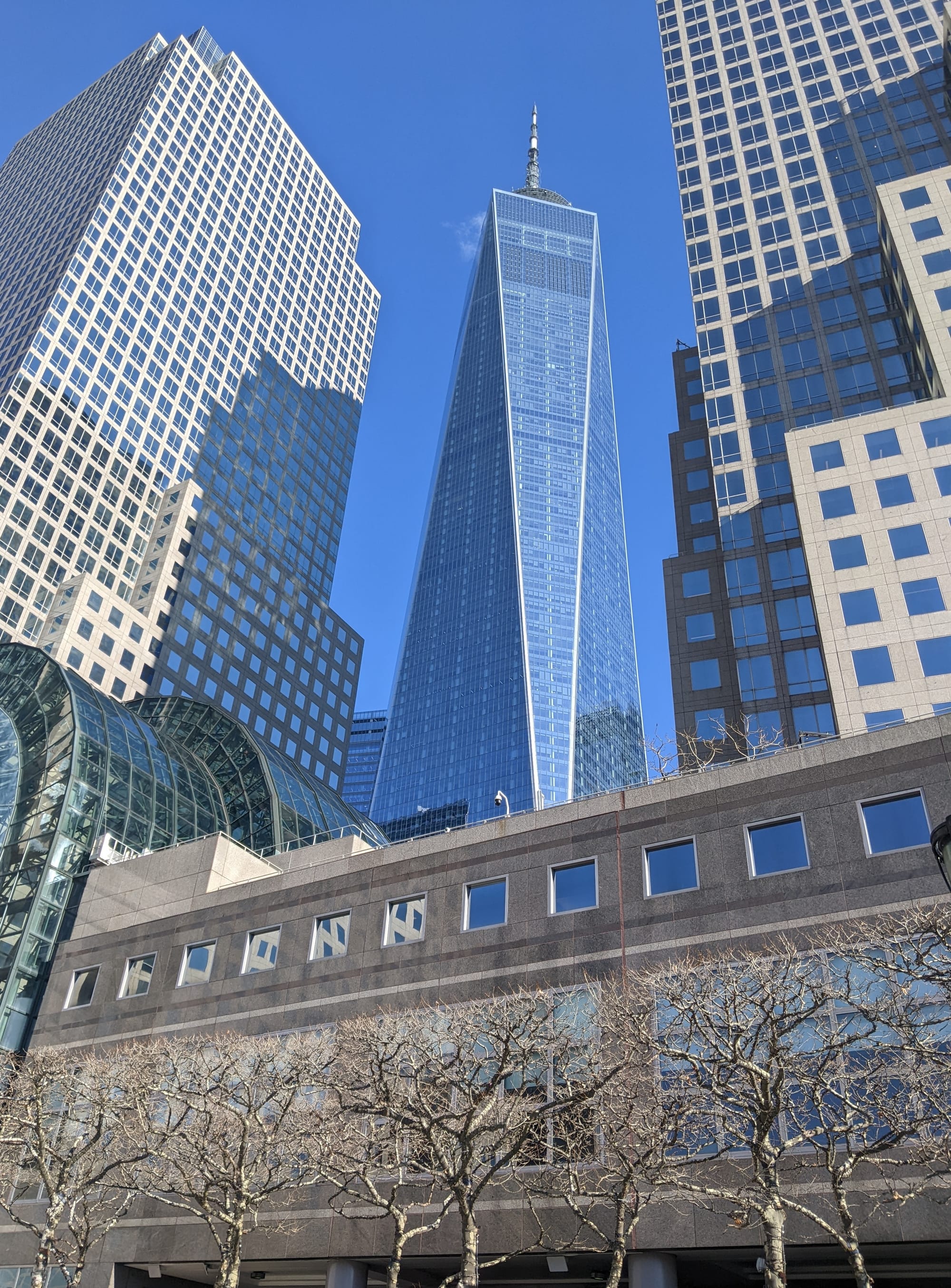
In eleventh grade, some men hijacked jets and flew them into the WTC, while I sleepily conjugated Spanish verbs.
*
People talk about ashes and paper falling from the blue sky that day, and for days after. I don’t remember that.
I do remember the blue sky, which pilots call "severe clear." I remember reporting to emergency homeroom that day. A tall kid with spiky hair and black boots climbed up on the teacher’s desk to turn on the television, which was against the rules (I often think of his boots on the desk) and we saw the news.
I changed into my sneakers, which I had with me for gym that day. Did I also stop by my locker for my French textbook, as if preparing for a siege?
We evacuated and marched north, taking bottled water from strangers lining West Side Highway. All the pay phones were dead.
*
That fall, my French teacher was away on medical leave. The substitute didn’t know French, but he knew Spanish and Italian. “I’ll just stay a chapter ahead of you in the book,” he confided to me — I was taking both Spanish and French.
This teacher had us write letters to an imaginary friend in France. With a stub of chalk, he jotted useful vocabulary on the blackboard: the saddest word cloud in the world. He asked me how to say “twins” in Spanish, it might jog his memory of the French word.
Then we ran into a problem. We hadn’t learned past tense. So we had to write our letters in the present.
The plane is hitting the tower. The tower is falling.
*
It was a terrorist attack, but we took it personally. It evicted us from our school. For a couple of months, we attended the late shift at Brooklyn Tech, 2-7pm or something like that. Dark fell fast at Brooklyn Tech. It was not our place.
Our place was a triage center now. Our cafeteria, our theater, our gyms.
The parents association was fighting with the principal was fighting with the Board of Ed was fighting with the governor — about whether it was safe for us to go back.
We just wanted to go back. To be an ocean of teenagers flowing up Chambers Street and over the West Side Highway by way of a bridge built just for us. The JMZ, the 456, the NR, the ACE, the 123: the trains drew us from all over the city, deposited us on Chambers. From there we flowed to Stuyvesant, the center of our universe. Never mind the barges docked at the foot of the school, loaded with debris.
The PTA said the theater was full of toxic dust, they said all the chairs had to be re-upholstered. They said HEPA filters they said they said they said —
It was our place. It was dirty in a different way. We made out, there. Eavesdropped on rehearsals for plays and concerts we never attended, only used as alibis. Hooked up, broke up, started up again. We’re married now. In our living room we have two copies of the 2003 yearbook. Tucked inside it, a glossy special edition magazine published by the school newspaper, with photos of people falling —falling or jumping? — from towers that too would fall. Knees knocked out from under them, breath knocked out from them.
Some agency had set up contraptions in the school's hallways, lunar landing modules but skinnier, spindlier, like praying mantises, to measure the air quality. We got used to them, echolocated around them. If our huge backpacks knocked them, it didn’t register.
Every day two guys in orange safety vests came into my precalculus class, took a reading, recorded particles per million on their clipboard.
*
Sometimes now, changing the bed sheets, wrangling the wool blanket into the duvet case (not cover), I remember Ilya's teenage bedroom, walls painted a cold blue, the diamond-shaped hole in his duvet case, which he said was a Russian innovation to make it easier to get the blanket inside. In school I wrote endlessly about him, and the towers, to the point where my English teacher said, "When the time comes, have the strength to let it go," and I took that as a challenge to never let go (but that’s another story).
I brought my hand-shredded drafts to school, and deposited them in the girls’ bathrooms. Not everything at once, but a little each day, and not the regular garbage cans, but the little tins in the stalls, meant for bloody things. Less likely anyone would rifle through those.
These twenty-fives years, I feel as if I got away with something. "9/11 survivor," writes my primary care doctor at the top of my file, and somehow this feels too generous, a trespass, as if I wasn't close enough to be in real danger and so the term isn't warranted, even though my doctor herself is a 9/11 survivor and so wouldn't she know? I was close, I was in danger, the danger was never a cigarette or a powder or a pill or a boy or a man or a knife or a gun, it was something else entirely, unknown and unknowable, and also I did survive.
POSTSCRIPT
I was sick this week, and so missed Wednesday's 9/11 Remembrance event at Stuyvesant. I couldn't even send in my piece for someone else to read, because I hadn't finished writing it when I came down with [whatever this cold bug was].
In the end, I don't know if it's finished, but it's longer than the three minutes allotted to readers at the event. So I've shared it here, there's no reason to "save" it for anything, no day is guaranteed to us.
Part of this letter first appeared on Divinity School in 2021.